

Your learning workspace
Start with a model, then put the idea into practice.
Pupil, parent and teacher views are demonstrations.
Cell Biology / Interactive learning
Biology,
made visible.
Look inside a cell. See how it works. Then test the idea for yourself, with a clear explanation at every step.
Your progress is saved in this browser.
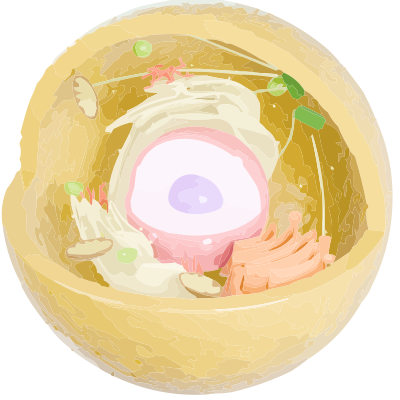 A world within
Look. Notice. Understand.
Every structure has a job.
A visual starting point before you explore the labelled learning model below.
Illustration: DBCLS · CC BY 4.0. Learning models are simplified and not to scale.
Read the visual guide
The animal cell contains structures with different jobs. Use the labelled model below to explore the nucleus, cell membrane, cytoplasm, mitochondria and ribosomes.
Any generated film is a stylised AI illustration, not microscope footage. Structure names and functions are explained in the separate teaching model.
- 01Look insideExplore a clear model.
- 02Try it yourselfMake a prediction.
- 03Make it stickExplain it, then revisit.
Next: Cell Scout
Explore, predict and check.
01 / Explore
Start with what you can see.
Rotate the model or switch to the clear diagram. Choose a structure to learn what it does.
Explore / Animal cellA closer look at the cell.
Preparing the cell labLoading the 3D model…
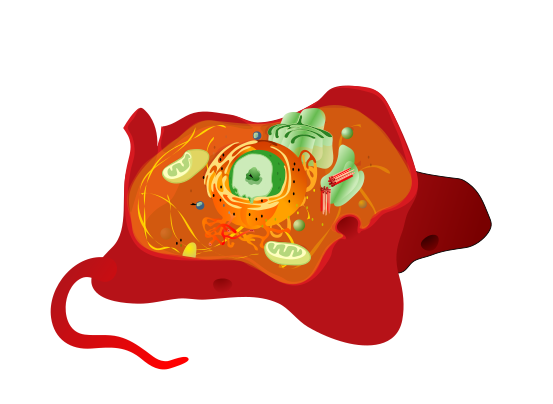
Choose a structureSelect a name to understand its job.
Core biology
Nucleus
Stores genetic material and helps control what the cell does.
Drag to rotate · pinch to zoom
3D teaching cutaway · colours and sizes are schematic. Choose a structure to learn its job.
02 / Put it into practice
One idea. A useful next step.
Five focused missions. Explore, predict and check your understanding, with an explanation after every answer.
My progress
What you have completed so far.
0%completed
Start a mission to build your Cell Biology map.
Another look
Topics to revisit.
- No topics yet. Your answers will shape this list.
Latest discovery
Ready to explore
Complete a challenge to unlock your first discovery.
Parent demo · browser-local information
See what has been completed—and what needs another look.
This sample view reflects Cell Quest progress saved on this device. It is not a formal assessment.
Demo learner0%of challenges completed
Learning activity
- Challenges completed
- 0 of 20
- Missions completed
- 0 of 5
- XP earned
- 0 XP
Begin Cell Scout
Start with animal-cell structures and their jobs.
Practise with an explanation.
- No topics have been marked for another look.
Family access.
Planned access would give each new account a six-month free trial. Family profiles, payment plans and account sign-up are still being developed.
Family plans are not available yetTeacher demo · fictional sample class
Set a short check. Spot where the class needs support.
Objective questions can be marked automatically. Written explanations would always need teacher review.
Question-level view
Sample dataSample class understanding
Animal-cell structures88%
Plant and animal cells76%
Bacterial cells69%
Active transport54%
Diffusion and active transport are being mixed up.
In the fictional sample, 11 pupils selected diffusion when particles moved against a concentration gradient.
Check the responses before deciding what to reteach.Pupil codes, not public profiles.
A future school pilot could use time-limited class codes, minimal identifiers and a reviewed retention policy.
CELL-204
Example onlyBuilt with care
A clearer way to practise Biology.
Explore before answering
Twenty visual Cell Biology challenges with explanations and no punitive lives.
Grown-ups can understand progress
Parent and teacher demonstrations translate answers into clear next steps.
Progress stays on this device
No real accounts, pupil records or payments. Optional website visit sharing stays separate from learning progress.
Help stays clear and safe
Authored hints, simple explanations and grown-up prompts work locally. Open-ended AI chat is not active.
Science image credits
The cell pictures are stored with this prototype so the game does not contact an image host while you play.
- Animal cell 3D and plant cell 3D by DBCLS, licensed CC BY 4.0; shown with HODRA learning overlays.
- Simple animal cell and simple plant cell by domdomegg, licensed CC BY 4.0; shown with HODRA learning overlays.
- Clear animal-cell diagram by LadyofHats, adapted by HoverFly, public domain.
- Interactive animal-cell model by OrganUI, dedicated to the public domain under CC0 1.0. It is a schematic learning aid and is not to scale.
- The compound light microscope is an original lightweight HODRA Education learning model. It is schematic, labelled for revision and not a service diagram.
- The interactive viewer uses Three.js under the MIT Licence. The model and viewer code are served by HODRA; no third-party request is made while you explore.


